“cogito, ergo sum (I think, therefore I am),” - René Descartes
The French philosopher, in the 1600s, came to the conclusion that our existence is only guaranteed when we are actively, continuously thinking. With a similar philosophy, Dr. Senjuti Saha and Dr. Yogesh Hooda meticulously crafted and conducted the first cohort of the “Introduction to Research Methods, Ethics and Project Management” workshop at CHRF in December 2025. With decades of experience between them, they designed this course to guide early-career researchers towards a well-rounded approach to science. 16 CHRF researchers from microbiology, molecular biology, genomics, and data science teams came together to look into the past, present and future of scientific research while reflecting on their own work.
The sessions began by looking into how our modern research practices, such as evidence-based research, unbiased documentation, meticulous measurement and peer-review, were shaped over time by philosophers and scientists. Trainees were then guided through the scientific method in practice, learning how to move from curiosity to a clear research question, identify a genuine research gap, and design a feasible, ethically sound study. Sessions highlighted the importance of responsibly presenting and communicating one’s work, especially in the age of social media, and how to effectively do so through storytelling.
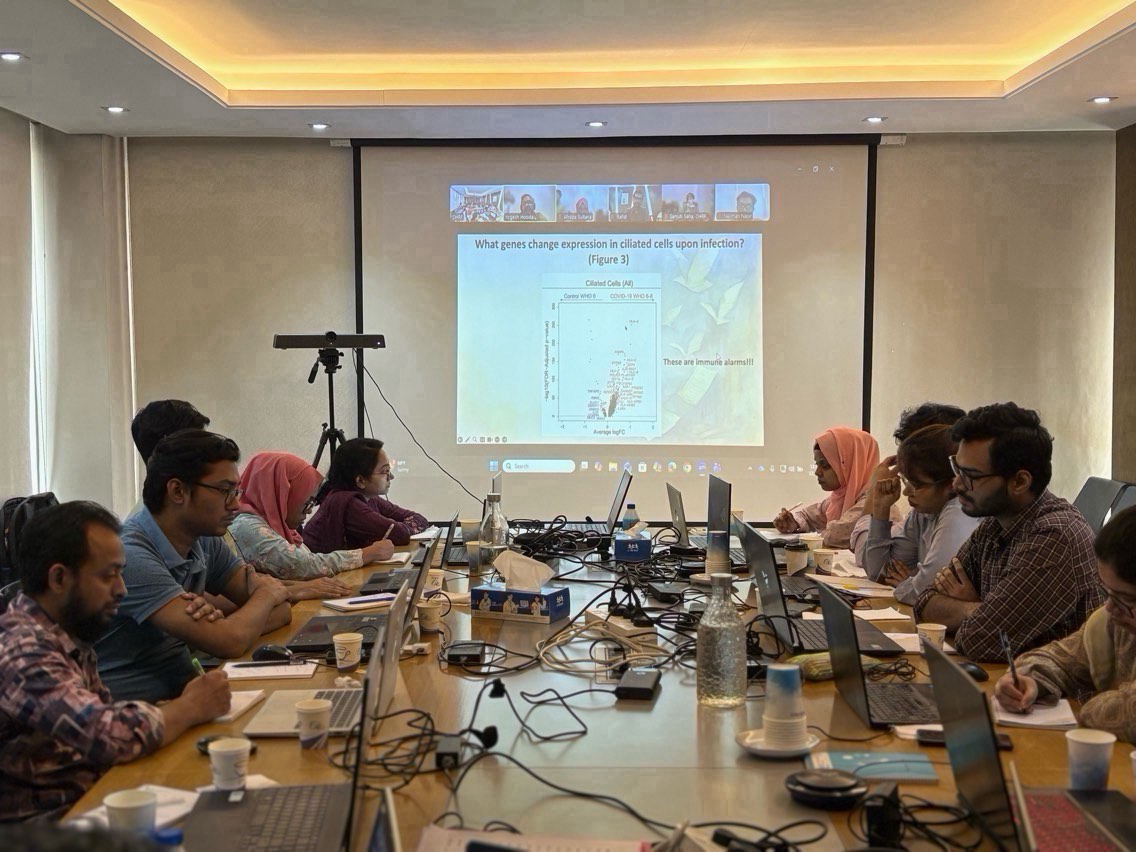
The workshop ended with group presentations as trainees presented scientific papers on epidemiology, infectious disease modeling and surveillance, microbial evolution, phage-bacteria and host-pathogen interactions, and immune cell dynamics in extremely premature infants; all connected to CHRF’s work. Behind each presentation were weeks of focused work, with participants spending long hours reading closely, analysing the papers, and carefully refining their projects. By the end, they gained perspective from one another’s approaches and received tailored feedback from both the judges and audience.
After more than a year of thoughtful planning, and nearly 3 weeks of intense work across timezones, by both the participants and instructors, the training closed on a hopeful note, with momentum that will carry into ongoing and future projects at CHRF.
.jpeg)